Sunday, August 23, 2026

Bringing philosophy back to life


Metaphysical Animals: How Four Women Brought Philosophy Back to Life by Clare Mac Cumhaill and Rachael Wiseman. Vintage. 2023.

A group biography of four women who were all Oxford undergraduates and emerged as professional philosophers after the Second World War, Metaphysical Animals is an ambitious project, interweaving four disjointed lives with social and political trends, as well as telling the story of how its protagonists set themselves against the current male-dominated philosophical orthodoxy.

The logical positivist A.J.Ayer provided a clear target. His influential Language, Truth and Logic (1936) cut through what he saw as metaphysical mumbo-jumbo with the demand that philosophy should confine itself to linguistic propositions that could be proved or disproved. Logical formulae began to make philosophy papers look more like maths.

But where did that leave morality and ethics? Out in the cold and, as Cumbhaill and Wiseman repeatedly tell us, subject to the withering put-down by smart, young and almost always male philosophers, “I don’t understand that”, which, they comment, was “no longer the beginning of a philosophical conversation, but the end of one”.

The resistance was led by Elizabeth Anscombe, Phillipa Foot, Mary Midgley and Iris Murdoch, the subjects of this book. Their work began, as the book’s clever double-meaning subtitle puts it, to “bring philosophy back to life” in response to what Midgley described as the “pure weedkiller” of the logical positivists’ approach.

Whilst “good” and “bad” might, as Ayer insisted, mean no more than “hooray” or “boo”, they argued that more specific words with moral overtones, like “shame”, “pride”, “brave” or “respect”, are complicated ideas created as “symbolic objects” in our culture. A child, as it learns, “must ‘catch on’ to the meaning of these descriptions and come to see his own actions and the actions of those around him under them”.

Through varied representations of culture, including poems, stories, maps and words, the agreed meaning of such words is shared. It depends on context, which in turn is part of the whole canvas of society and history. As “metaphysical animals”, we “dwell in the past as well as the present” and a philosophy which properly reflects life as experienced cannot be isolated from those unquantifiable complexities – however unsatisfactory that might seem to the logical positivists.

The book links the social history of the women philosophers’ influence to the changing population of Oxford during the war. Men disappeared as they were called up, Jewish academic refugees appeared as they managed to escape the Nazis and at the end of the war, the university population swelled again with those who had missed out during the war years.

The authors struggle to knit the turbulent lives of the four women with their many partners, spouses, dependents and changing professional lives into a coherent narrative and the reader needs to keep on top of a large and changing cast of peripheral characters (but there is always the index to help).

Cumbhaill and Wiseman do a skilful job in connecting the evolving thinking of each of the four philosophers with that of the other three, highlighting meetings, conversations and shared crises as points when the philosophical ideas can be explained in just enough detail to provide a sense what was at stake.

The women seem to have had a wider influence than today’s philosophers, often being invited to give BBC radio talks with titles like “The Natural History of Contradictions” and “The Novelist as Metaphysician” and churning out articles and reviews for general publications. Their message and tone, after all, was far more digestible than that of the logical positivists.

I’m left wondering what impact on Oxford philosophy, or philosophy in general, the women had. In their battle to bring “philosophy back to life”, were they successful? I suspect not, because if they had been, the authors would surely have ended on that note of triumph. Did they have a partial success or create a side-stream that is still flowing today? The reader of Metaphysical Animals will be rooting for them, so I hope there is still something to cheer about.

View all my reviews

Sunday, May 3, 2026

Inside Hollywood: the Screenwriter's Tale

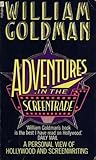
Adventures in the Screen Trade: A Personal View of Hollywood and ScreenwritingAdventures in the Screen Trade: A Personal View of Hollywood and Screenwriting by William Goldman


Do they teach this book in film school? It's so readable, so gossipy and interesting you might think not because it's too much fun.

But it's also so practical, so illuminating about the craft and, especially, about the complex web of human relationships involved in film-making, you might think film schools would be crazy not to insist that every student read, learn and inwardly digest it.

William Goldman's account of his working life can't help but include stories about colleagues like Robert Redford, Dustin Hoffman, Clint Eastwood and others. He talks about disastrous films. And great films that were counted as disasters. And about the many kinds of hell he was put through as a writer on projects that lasted months or years and then never happened.

So the book is part tutorial - what a scriptwriter actually does - and part autobiography. And the joy of the latter is that he gives himself no airs, despite having written, Butch Cassidy and the Sundance Kid (1969) and All the President's Men (1976), A Bridge too Far (1977), Marathon Man (1976), Misery (1990) and many others.

At the end of the book, there's a very specific treat: the chance to see how he adapts a short short (his own) into a script, and then has other professionals (a designer, cinematographer, editor and composer) critique it, as if they were preparing to be part of its production. The reader gets a chance to see exactly what kind of detailed issues would arise.

The highlight of that section is the comments of the director George Roy Hill (he of Butch Cassidy, Slaugherhouse Five, The Sting and The World According to Garp), who is unrestrained in his rudeness about Goldman's script:

“What you've done here is take a story that works pretty well on paper, but you really make some fundamental errors in your screenplay -and since you are very glib and very clever and very able, you have covered up those errors and masked them so that most people would not see them. But I would I think be inclined to unmask you.”

What follows is a scathing analysis, which you'd think would make any writer either give up on the whole idea of the film, or abandon the idea of working with Hill. But Goldman takes it on the chin, and lets us witness his humiliation - in his own book.

"Pretty withering," Goldman comments when Hill has finished, "but pretty helpful too". He's a brave man. He says he disagrees with what Hill says but adds - three times - "he may be right".

What comes out of the book is that screenwriting may be lonely work - just you and pages to fill. But it is equally a role that required deft handling of people. And not just ordinarily awkward people, but Hollywood people, people with huge egos, huge wealth and ambition who didn't get where they are by trying to make everyone happy. And they are people under pressure: to get decisions, to avoid wasting millions or blowing their own professional reputations, and all that against deadlines.

In the end, Goldman's message is that for all his experience and professionalism, in Hollywood "nobody knows anything". The public can just as easily ignore a film that Hollywood insiders think is brilliant and love one that Hollywood has written off as a dud. If it was easy, I suppose they wouldn't get paid what they do.


View all my reviews

Sunday, April 5, 2026

Cockney or Aristocrat? The Case that Captivated Victorian Britain

The FraudThe Fraud by Zadie Smith
My rating: 3 of 5 stars

Zadie Smith became fascinated by a couple of enormous legal cases in Victorian London which tested the claims of a man from Australia who said he was the rightful heir to an aristocratic estate in Hampshire.

‘The Tichborne Claimant’, as he was known, was at the centre of much more than an epic legal battle (which he lost). He became a rallying point for radical political movements, and - strangely - a symbol of the dominance of a Catholic elite in British society.

Smith has cleverly interlocked this history with that of the once-successful novelist W.H.Ainsworth, whose popularity was overtaken by Dickens, and with the enslavement at a younger age, of the Claimant’s supporter and a former faithful family servant, Andrew Bogle. She takes a few admitted liberties with timelines, but the key points of her story match the history.

It’s quite a long novel, but not as long as the book looks because it is made up of many chapters which are mostly no more than about two pages long, which means there is an almost blank page every page or so.

I came to the novel having read a long book on the subject - The Tichborne Claimant by Douglas Woodruff (1957) - which goes into more detail than Smith, who has a broader panorama to fill. So I already knew many of the characters and legal complications. I wonder if readers coming to it fresh would be able to figure out what was going on.

Woodruff is, if anything, somewhat sympathetic to the Claimant - at least, he does not take it for granted that the court decisions dismissing his claim were correct. Smith calls her book The Fraud, so there's not much doubt about where she stands on that question. Which makes it a bit less interesting.

View all my reviews

Sunday, March 8, 2026

Trollope: a genius, and much more

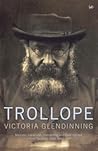
TrollopeTrollope by Victoria Glendinning
My rating: 5 of 5 stars

Trollope: a genius, and much more

Victoria Glendinning’s comprehensive account of the life of Anthony Trollope manages to be both humane and scholarly. His was a life of such stress, such achievement, such tragedy and strain, physically, mentally and emotionally, that it is hard to believe he even survived to the 67 years he managed.

His energy and prolific output in the face of impossible odds mirrored that of his mother, Fanny Trollope, who raised herself up the social ladder through sheer determination; and his insecurities and suffering – including rejections in both his official Post Office work and often in his writing – was the story of his hopeless, unpopular barrister father.

Glendinning illustrates Trollope’s emotional life and illuminates many interesting aspects not covered by his letters or other archives by finding relevant passages in his fiction, always so fitting that her reader cannot question their contribution to our understanding of the man.

Trollope lived in at least four worlds: his family, his career at the Post Office, his imagination, always churning away with more output, his social life, with his love of hunting and hearty sociability at London clubs, and his business world, in which he juggled contracts, commissions, property moves and constant handouts to needy family members or distant relatives.

It is an exhausting story but Glendinning keeps it fresh and interesting at every turn – through the constant travelling, around Ireland, Britain, Europe, the West Indies, America (twice), South Africa and Australia (twice). Even with today’s streamlined transportation it would be a lot but how he did it in Victorian conditions and churning out his daily quota of words too is hard to fathom.


 In his late fifties, to carry out his commission for a travel book on Australia, for instance, he “rode up to sixty miles a day through endless forests of gum trees, with the necessities strapped to his saddle”. This large, famous, bearded figure caused offence at dinners given in his honour on such trips because he could only appear in his travelling clothes. And apart from that he was always a loud, boisterous character, not at all what his readers had imagined.

Trollope had a long and apparently successful marriage, to Rose Heseltine – a woman who seems to have been notable more by the absence of defining characteristics than by anything that allows us to bring her into focus. It is an acknowledged area of mystery in the portrait, mainly illuminated by a persuasive selection of marital situations from the novels which one cannot help thinking had their inspiration in the writer’s own private life.

My only wish for more would be about how Trollope actually wrote his novels and managed to be so extraordinarily prolific - 47 novels (compared to Dickens’ 15, for instance). We learn that he was not much of a planner, often deciding key plot points on a whim and not knowing how the story would end. And that his lonely childhood gave him a facility for day-dreaming, which, on long journeys for the Post Office turned to imagining stories.

But still, how did he keep so many richly imagined worlds in play in his brain and how was he always able to continue writing, limited only by time and never by his ideas or difficulties with what he had started?

I suppose the answer is simply that the man was a genius – and as Glendinning shows us – an unlikely one, whose gift was easy to miss among the other many extraordinary circumstances of his life.

View all my reviews

Saturday, February 21, 2026

Heir not so apparent: the Tichborne claimant

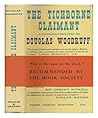
The Tichborne Claimant: A Victorian MysteryThe Tichborne Claimant: A Victorian Mystery by Douglas Woodruff

The case of the Tichborne claimant was a sprawling legal and media story in the second half of the nineteenth century which tied up the courts, worried the establishment and provided an endless source of gossip, argument and outrage for the whole of Britain for several decades – and even, see Zadie Smith’s novel The Fraud (2023), to this day.

At its heart was the loss, supposedly at sea off South America in 1854, of the young heir to the Tichborne estate and baronetcy in the south of England. His mother, hoping he was still alive, advertised far and wide for news of her son, offering a reward. A man came forward from a village in Australia called Wagga Wagga, claiming to be the lost Roger Tichborne.

From the start, what should have been simple was complicated: the Claimant bore a certain likeness to the lost son but while the son had been slim, this man was huge. And despite having had a good private education, this Roger Tichborne spoke with a Cockney accent and seemed barely literate. But his mother accepted him as her son and his story was believed by many who had known him around the Tichborne estate in Hampshire. 

The Claimant

On arriving in England, the Claimant almost immediately made a mysterious trip to East London, the first move in a persistent sub-plot which led to the theory that the Claimant was in fact a butcher called Arthur Orton who had emigrated to Australia from Wapping.

Evidence was gathered, sides were taken – the powerful Tichborne family trying to deny the claim - and the case became so voluminous that whatever you chose to believe, there was more than enough evidence to make an apparently incontrovertible case for it. The only definite fact was that the Claimant either was or was not Roger Tichborne.

The simplicity of that question and the complexity of answering it turned the case into a kind of Rorschach test of social attitudes. Everyone saw something different in it. Were you with the Tichborne family or against them and the Catholic establishment - which the Claimant believed was conspiring against him? Or were you for the downtrodden individual in his fight against an overbearing state, because, strangely, the Claimant’s supporters, whilst believing he was the aristocrat he said he was also saw him as a symbol of the oppressed proletariat?

There were two trials, one civil (on the identity question) and the second criminal (for perjury allegedly committed by the Claimant in the first). Hundreds of witnesses were examined and cross-examined. The speeches and summings-up lasted months and the Claimant’s defending barrister in the second trial brought out an account of the proceedings in no less than nine volumes.

And yet for Douglas Woodruff and others wanting to tell the story, the trials themselves were by no means the end of it. The second trial ended in February 1874, with the Claimant being sentenced to fourteen years in jail. He was released after ten years and lived for another fourteen, during which he toured the country making money by giving speeches about his continuing claim and sometimes, in his desperate need for income, being reduced to little more than a circus exhibit. He married for a second time and had more children and died in penury.

In the years following his sentencing more evidence trickled in and the mysterious Arthur Orton (who, if he could be proved to be a separate person to the Claimant would hugely strengthen the Claimant’s case) was strongly suspected to be a man who was living in an insane asylum in Australia under a different name.


Roger Tichborne (before he disappeared)

Woodruff’s balanced account of all this comes to a weighty but not excessive 450 pages and whilst it would be impossible to tell the story in a linear fashion, he irons out many wrinkles, grouping subjects together without trying to argue a case for one side or the other.

As to where his own sympathies lie, having been immersed in the detail, he ends up more on the side of the Claimant than were the courts. He blames lack of funding of the Claimant’s legal team for their inability to present a stronger case from the evidence that would have been available.

Where the Claimant’s opponents painted a picture of a clever schemer, carefully amassing detail about the man he was pretending to be, Woodruff talks about a man whose “claim bored him and he was not prepared to take very much trouble about it”. Woodruff describes someone who was telling the truth, albeit in a muddled way - because he was “not at all clever, reckless and short-sighted and improvident to a breath-taking degree”.

As a reader of Woodruff’s version of the story, I would be inclined, if pressed to pick a side, to believe the Claimant, for two main reasons. First, while his early letters appear almost illiterate, by the end, he was writing in an educated, well-argued, almost stylish way, completely unlike what one would have expected from someone of Orton’s background. Perhaps he suffered some extraordinary trauma in the years between his disappearance and reappearance as the Claimant - possibly connected with very heavy drinking. Whatever happened in that period changed both his body and his mind in ways which were slowly restored over the years. Those who saw him in jail after its regime of enforced abstinence said they wished the trial could be reheard because now he looked so much more like the pictures of Roger Tichborne.

The Claimant never wavered in his basic story that he was Roger Tichborne. The details were all over the place, but having appeared in Australia with his claim, he never showed any doubt about it, against all the odds. Is it likely that if it was an idea which had simply occurred to him when he was in Wagga Wagga in response to hearing of a reward for the finding of Roger Tichborne, he could have adopted it with such complete life-long assurance? Whoever he was, his claim was as sure as the public response to it was divided.

View all my reviews

Saturday, January 24, 2026

Profile of a great editor: Harold Ross and The New Yorker

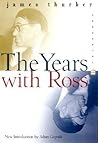
The Years with Ross: A Classic Memoir of The New Yorker's Unforgettable Founder and Golden Era (Perennial Classics)The Years with Ross: A Classic Memoir of The New Yorker's Unforgettable Founder and Golden Era by James Thurber

James Thurber's memoir of Harold Ross, the founding editor of The New Yorker, is fascinating for the author's evident affection for Ross despite his unreasonable, dictatorial, often ignorant and always infuriatingly detailed comments on his writers' work. Together with his inability to deal with what he considered awkward personal situations - such as the unexpected presence of a woman in his office - he seemed ill-suited for a role that required constant dealings with sensitive people.

Despite all that, Thurber paints a picture of Ross as a man who won the loyalty of his colleagues because his heart was in the right place - in his commitment to excellence in his magazine, his many untrumpeted kindnesses and even for his weaknesses, for gambling and in putting his trust in the wrong colleagues, sometimes with disastrous financial consequences.

Thurber was a relatively early contributor to the magazine and witnessed Ross nursing the business through multiple crises. In detailing them, he gives an insight into the economy of pre-war American journalism, a world in which, for instance, writers were paid by the word (leading to arcane disputes over whether they should refund money to the magazine if their copy was cut down between submission and publication). The writers could also sell to rival papers or magazines, sometimes after a 'first refusal' contract with The New Yorker. And the magazine itself would do its best to sign deals for reprinting of its work elsewhere, in The Reader's Digest, for instance.

While Ross was a stickler for detail, with a particular obsession with commas, he was also a no-nonsense newspaper man who had come from Colorado and learnt his skills, starting as a reporter, on a range of publications. He wanted The New Yorker to be a funny magazine and was always appealing for jokes and funny stories. The magazine's cartoons, especially those by Thurber, were one of its trademarks. But Ross was also willing to support more serious journalism, such as an influential report from Hiroshima after the dropping of the bomb, to which he devoted a whole issue, and was proud to have done so despite often complaining he was offered too many "grim" stories.

Thurber himself continued to work through various health problems and, eventually, blindness. His book is admirably free of any self-regard or self-pity, although, as others then and since would testify, he was himself as remarkable a figure as Ross. The book leaves a lasting impression of The New Yorker being an honourable enterprise which produced great work, and, more broadly, a life-affirming sense that true friendship among a group of creative people can be immune to any number of rows, insults and humiliations. But of course they are what makes Thurber’s tales interesting.

View all my reviews

Saturday, January 10, 2026

It seems like a good time to think about appeasement

MunichMunich by Robert Harris

'Munich' is a clever combination of historical novel and spy thriller. It has something worth saying in rehabilitating, to some extent, the reputation of Prime Minister Neville Chamberlain. Criticised an appeaser, he was, in Harris' telling, simply a leader who had seen the suffering of the First World War (in which he was too old to fight) and was sincerely determined to do whatever he could to avoid another.

Harris overlays the tight timetable that preceded the Munich Agreement of 1938 with a parallel story of his own. Two student friends, one British and one German, get themselves into the negotiations between Hitler, Chamberlain, Mussolini and the French prime minister, in order to try to persuade Chamberlain that Hitler had much larger ambitions than the Sudenland - the immediate subject of the Agreement - and was not to be trusted.

In its early part, the book neatly alternates chapters between Britain and Germany - a triumph of structure and planning, building momentum and culminating in some spectacular set pieces at the end.

I am only giving it four stars instead of five because I wanted to leave a notional star that I almost certainly would have awarded Graham Greene if he had written it.

Incidentally, the film 'Munich: the Edge of War' (2022) more than does justice to the book, with outstanding performances from Jeremy Irons and George MacKay among a uniformly impressive cast delivering an excellent script. 

Saturday, June 7, 2025

Celebrating human uniqueness

Why Us?: How Science Rediscovered the Mystery of OurselvesWhy Us?: How Science Rediscovered the Mystery of Ourselves by James Le Fanu

James Le Fanu’s book has the worthwhile intention of drawing his readers’ attention to the complexity and sheer unlikeliness of the world around us – and, especially, of our unique place in it.

Natural human amazement been ground out of us, he believes, by over-confidence in the ideas of Marx, Freud and Darwin, each of whom started with a legitimate but limited insight and expanded it to claim universal truths, about, respectively, economies, the human psyche and the natural world.

Le Fanu is a doctor, so when it comes to science, he knows what he’s talking about even if his views are decidedly unconventional. Most of the book is devoted to arguing that science’s claims have over-reached the evidence for them. We don’t understand how genes work or why there is such an overlap in the genetic makeup of species which have little in common, for instance, but the theory of evolution is an article of faith, not be questioned.

We certainly don’t understand how the brain works, however detailed the experiments in which parts of it are activated in different tasks. We don’t know how neurones record memories. We don’t even know how gravity works.

The assumption that materialism is ‘all there is’ and that evolution must, in the end, somehow or other, explain every tiny detail of every living organism, puts a huge weight of explanatory responsibility on the ideas of beneficial mutation, natural selection and the survival of the fittest.

Le Fanu’s doubts about all this are interesting and well-argued. His account of where they leave us is not quite as solid. He will occasionally drop the word “soul” in, as if it’s something everyone is comfortable and familiar with. But not all his readers will have been brought up at a Catholic monastic school, as he was at Ampleforth.

Less pointedly, he talks about “the possibility of there being a ‘dual’ nature of reality, with both a material and a non-material realm”. This is the “commonsense” view that has been held for millennia, he says, which has, in recent years been “censored, written out of the script as being of historical interest only, a relic of the superstitious ways of thinking of the distant past”.

The point of drawing attention to science’s failures is to give credence to the aim he gets to in his final chapter, which is called ‘Restoring Man to his Pedestal’. If science’s limitations were acknowledged, he says, that would have many benefits, including allowing us to see the world anew, “fresh-minted in glorious Technicolor as astounding and amazing, magical and mysterious”.

Free will would become intellectually respectable again, restoring the assumption that we exercise personal freedom and responsibility. Science itself would be liberated from its “degenerate” research programmes and allowed to investigate areas which are currently considered off limits. (Rupert Sheldrake would be pleased.)

As for religion, it would enjoy a “renewed sympathy” which would “heal that rupture in Western civilisation between its present and its overwhelmingly Christian past”, along with other religions, who have a common belief “of there being ‘more than can be known’.”

This is an underdeveloped part of the argument. Whilst it doesn’t seem right to dismiss all of religious thought and culture as superstition, as scientists may want, there’s no question that believers in most faiths are asked to sign up to some very specific and unproven claims. Is Le Fanu saying we shouldn’t worry about that – which would be odd since he’s dismissing the claims of science on the basis of a lack of evidence – or is he saying that there will be a new, less specific kind of religious belief – perhaps just a kind of nature-worshipping awe, combined with the admission that there’s a lot we don’t understand? He’s less forthcoming on a future vision for religion that on the current problems of science.

Marx and Freud no longer hold sway the way they once did, Le Fanu argues. It’s time we downgraded Darwin too. It’s a refreshingly independent-minded book. Even if Le Fanu hasn’t presented a solid alternative to science’s world view, it’s worthwhile – and eye-opening - to be reminded what an odd thing it is that we exist at all.

But whose idea was it to call it Why Us? That doesn’t do justice to the subject. And the subtitle How Science Rediscovered the Mystery of Ourselves is even worse. The main point is that far from any ‘rediscovering’, science refuses to admit the mystery of our existence. The book is 16 years old, was well reviewed and is still worth reading, but it could have been so more influential with a better title. Science in Denial? Humans are Special? What Science Doesn’t Admit? Restoring Humanity’s Self-Esteem? The Unique Species? 

Thursday, August 15, 2024

Caro's epic biography of LBJ: as gripping as any novel

The Path to PowerThe Path to Power by Robert A. Caro

Robert A. Caro’s The Years of Lyndon Johnson is historical biography on an almost unimaginable scale. This first volume (768 pages plus more than 100 pages of notes) feels like a non-fiction equivalent of War and Peace - equivalent in richness and literary excellence as well as length – and is as enjoyable to read as any novel.

And there are another three volumes - or four if the 88-year-old Caro can finish the final one - to complete Johnson’s life. The second, Means of Ascent, is the book William Hague said he would choose to take to a desert island: it “conveyed more brilliantly than any other publication what it really feels like to be a politician”. That is too good an endorsement to ignore: I will continue devoting hours to Caro.

Volume one alone, The Path to Power, provides an extraordinary education in a huge range of subjects: the history and geography of Texas; the poverty of its Depression era farming communities; Roosevelt and the New Deal; congressional elections; oil money as a political force; corruption in state and federal politics. Understanding all of these is necessary, Caro demonstrates, to understanding the career of Lyndon Johnson.

Johnson was the son of an honest and respected local politician from a remote part of Texas, but a man whose finances and reputation collapsed in later life, to the boy’s eternal humiliation. We learn about tensions – and hunger - in the Johnson family and the harsh, primitive life of the community. With no electricity, farming was little changed from the nineteenth century.

Caro’s brilliance is in the seamless interplay of the telling detail and the wider picture. The reader is never confused about the relevance of the particular to the overall narrative. We see the young Johnson, an ambitious young political assistant in his twenties, ducking into shop fronts on the streets of Austin, Texas, to comb his hair obsessively as he sees a politician approaching, so that he can emerge with an apparently surprised and casual greeting, always trying to impress his seniors. He had a talent, Caro shows, for bringing out paternal feelings in older men. And we hear about Johnson’s love life – always courting the daughters of the wealthiest families. We see his frustration at not being the centre of attention in a social gathering: he had a habit of falling asleep at a party if he was ignored. And we learn about his extraordinary appetite for work and his ability to pick subordinates who would never question the crazy demands he made on them.

The Path to Power is no hagiography. Johnson’s willingness to pay for votes, in cash if necessary, was not unusual in Texas at the time (the late 1930s). His first campaign for the senate involved rallies in which crowds stayed through what Caro describes as Johnson’s arrogant and unappealing speeches in order to win cash prizes that were promised at the end. The local officials who counted votes were the recipients of envelopes of money from candidates’ campaigns. (Trump’s desperate plea for officials to “find” votes to tip the balance of a Presidential election is part of a grand tradition.) Johnson only avoided being hauled before a Department of Justice investigation into his campaign finances by the interventional of President Roosevelt, whom Johnston has spent years cultivating.

The Democratic party held sway in Texas and the whole of the South in those days. But the tension between politicians’ desire for government projects (dams to generate power or the electrification of rural areas) and their conservative instincts to limit the power of Washington – and the national debt – led to conflict within the party. Roosevelt’s Vice-President, a Texan, John Garner (“Cactus Jack”) was fiercely conservative. Whilst he agreed initially that New Deal spending was necessary to pull America out of the Depression, eventually he split with Roosevelt and even planned to run against him. Johnson was caught in the middle (although a very small fish at the time). His skill, Caro shows, was in making both sides in this vicious fight believe he was with them. One of the most striking features of Johnson the politician was that he rarely articulated views about policy which might ‘come back to haunt him’, hardly ever speaking in Congress, for instance.

Caro’s storytelling – and Johnson’s incredible story – make for a gripping tale. Unless you already know about Johnson’s career, you will want to keep reading, to find out whether he wins or loses the next election and how he manages to use his powers of persuasion as a junior Congressman on the President of the United States. The final episode of the first volume, in which Johnson battles for a place in the Senate against a popular and populist governor of Texas who was no politician, having made his name as a folksy radio personality, is a classic illustration of the power of money on politics. It was oil money versus money from the beer and spirits industry. Nobody comes out of it looking good, which makes for a satisfying conclusion after Caro has shown so thoroughly that neither side deserved to win. 

Sunday, December 4, 2022

Too much poetry for a novel, but perfect for Wes Anderson


In the Skin of a LionIn the Skin of a Lion by Michael Ondaatje


Apologies to the author, but I'm afraid that by the end, I found this novel annoying and pretentious. It starts well, with some vivid descriptions of boyhood in the Canadian backwoods around the start of the twentieth century. Then the story describes the construction of major pieces of infrastructure in Toronto. I thought I might learn something about the city's history.

But Ondaatje's spare style, which, I'm guessing, is supposed to give his scenes a poetic clarity, soon begins to tire. It's like Hemingway written by T.S.Eliot. And why not just use quotation marks like everyone else instead of indenting paragraphs after dashes to indicate that someone is speaking?

You have to keep your wits about you to know which of several men living on the fringes of society or the women they manage to have fall in love with them (with unusual ease) we are dealing with. That's because the chronology is artfully muddled, leaving readers to reassemble events for themselves - admittedly from not too many pieces, but it's a task I felt was left to us rather inconsiderately by the writer.

In my edition of the book, there is an introduction by the poet Anne Enright, explaining its greatness. Could it be that someone was worried that otherwise more readers might feel the same as me?

Enright remembers first reading the book when she was on a creative writing course at the University of East Anglia. She now warns her writing students that the book is "full of things that Michael Ondaatje can do, but that you probably can't do, or can't do yet". Later, she notes "how deeply I have absorbed the book" - to the point where "it makes me think you can progress through time like a poet" or, more bluntly, "you can do whatever the hell you like with time". (Frankly, I wish I'd chosen to do something else with mine.)

And what about the ending? As I said, the tough men in this book do a lot of seducing - even, for instance, when concealed horizontally on a large tray for growing mushrooms. The unlikely echo of Bond becomes more obvious in the final set piece which involves boats, swimming through pipes, dynamite and a one-to-one confrontation with a villain - albeit an evil capitalist rather than a proper Bond villain.

It would be a strange and very visual movie: could Wes Anderson be persuaded?

View all my reviews

Sunday, October 9, 2022

What can historians hope to achieve?


What do we mean when we ask what were “the causes of” a historical episode? Any answer must surely involve claiming that without that cause, the episode wouldn’t have happened in the way it did. And yet we’re never going to be able to verify that claim: we can’t do the experiment in which everything else is the same except for our suggested cause, and see whether its absence, or appearance in a different form, changes the outcome.

Counterfactuals can never be more than an interesting parlour game because trying to imagine a single change in what happens in the world raises new questions. What would have happened if Argentina didn’t invade the Falklands? That might seem to be a relatively identifiable decision that might have gone the other way. But further thought reveals muddier waters: if the Argentine government had acted differently, would that be because it had received different signals from the British about a likely response to an invasion? And what in Britain would therefore have been different to have made that possible? The point of a counterfactual is not to work backwards to analyse what might have caused the invented event, but the question remains as to whether different factors that might have led to the fictional decision should be part of the fictional world in which we are trying to examine the consequences? My point is simply that cause and effect are part of a tangled network of interactions.  


Am I being too literal in trying to apply scientific method to historical causality? After all, there are plenty of fields of human activity - such as politics, social work or therapy - in which professionals make judgements about causality in complex situations and act on them. If we raise taxes on this, it’ll promote that; if we encourage a person to do this, it’ll help them with that; if my client thinks like this about her past, it’ll help her with her life today. 


But history is different, because both the “if” and the “then” parts of those theories are already unchangeable. While other professionals can pull a thread in the sweater and see where it leads, the historian is only able to observe the sweater under a glass case, to look but not to touch.


So where does that leave the search for causation in history? Was Nazism an aberration that caused the Second World War, or was it the product of currents in German history over many previous decades? Was the war the inevitable consequence of the settlement at the end of the First World War or was it caused by the same factors that led to the first war? Arguments can be constructed on both sides, just as skilled debaters or barristers can make a convincing case on either side of any argument. 


Perhaps it’s not surprising that historical causation is impossible to pin down. After all, we’re comfortable with that being the case in much more accessible situations. Why will I go to work on Monday morning? Is it because I always do? Is it because I need to finish off some work? Is it because I want to get paid? Is it because having a job gives me a status in society that I enjoy? Is it because I’m hoping to get promoted? Is it because I know I’ll be able to have a cup of coffee when I get to the office? If historians en masse were asked to ascribe a cause in this situation - where they could have access to all the information they wanted -, I’m not sure they’d come up with anything more convincing than novelists. Because judges of the outcome of such a competition to explain causes - readers of the historians’ output - would, I believe, be swayed most by the plausibility of the narrative: how well it flowed, whether motives felt real, whether there were sufficient corroborative details; in short, whether the reader was persuaded by a picture of human nature that they recognised from their own experience. And that’s where novelists might have the edge. 


In the end, accounts of
why something happened, whether in history or ordinary life, are essentially nuanced claims attached to a description of how it happened. And whilst a definitive causal claim in history, if convincing, is seen as ‘bold’, ‘provocative’ or ‘radical’, to detractors, it’s (sometimes patronisingly) dismissed as a colourful expression of the writer’s personality, or worse, an interesting example of the biases commonly seen in the culture at the time of writing. As a business, history needs these colourful outliers, both to attract the interest of a wider public - to present ‘provocative’ TV series for instance - and to provide material for more cautious historians to dissect and integrate with the mainstream. The outliers are the creatives and the rest are the housekeepers. The creatives aren’t necessarily superior and the housekeepers can be judicious summarisers as well as cautious nitpickers. And the process of moving forward through the proposal of a new paradigm followed by its absorption into the mainstream is unavoidable, and not unique to history. 

In psychology, for instance, a new experimental paradigm creates excitement because it seems to offer powerful insights through an elegant and apparently definitive technique (for example, the Stanford prison experiment of 1971, or the extensive work of Kahneman and Tversky on cognitive biases). But over time, and in proportion to the success of the original work, other researchers try to replicate or falsify the experiments. A negative result is noteworthy because it challenges the new orthodoxy: either the original results were wrong or they depended on a hitherto overlooked factor which throws doubt on the conclusions drawn from them. Progress has still been made, in that the issues have been explored and experiments conducted. But the more work that’s done, the less clearcut the original conclusions appear. 


Are the ‘sub-genres’ of history - social, feminist, cultural, emotional etc. – the equivalent of new experimental paradigms, each staking its own claim to the truth through new methodology, just as new experimental techniques in psychology claim to have found a way to codify and study new areas of our thought or emotions? To make such a claim, the history sub-genres would have to be saying that they were not just defining an interesting new source of material or new subject matter, but that they are able to explain why things happened in a way that wasn’t formerly possible. So, to explain the suffragettes, for instance, do we need social or feminist history, because the insights they provide would otherwise be unavailable? When innovative work is influential, as in psychology, it will attract those who want to challenge its claims, or, more flatteringly, to imitate its techniques with other material.


The very passage of time, in both history and the sciences, gives later contributors a sense that they are qualified to take a superior attitude to the great figures of their discipline, simply because more has happened since those figures were at work. Today we can see great work in context, and, in that sense, ‘know better’. So no student today would hesitate to criticise Freud, Piaget, Macaulay or Gibbon. But how much progress has really been made? Whilst psychology has one foot in the hard sciences - physiology, neurology and biochemistry - and therefore can, in principle, hope to anchor its more abstract claims on them, history remains a humanity, also committed to speaking truth but not as sure how to measure it. Because, to return to where I started, beyond simply collecting data, how can history take the machine apart to see how it works? Is it a question of constructing well-argued cases or seeking a plausible consensus? However well you do that, in a few years time, someone will surely dismiss your conclusions as having done nothing more than to illustrate the prevailing culture of your times, or, if you’re important, to reflect some overlooked truths about your own background or personality. Maybe it’s time for history to embrace its humanity - and strive for art rather than science, to aim unashamedly to produce rigorously well-informed and well-expressed opinions about the past rather than having ambitions beyond that, which will inevitably lead to disappointment.


There’s an elegant graphic I saw on Twitter in which a pattern of dots moves round the screen in a repeating cycle. When the dots are joined up in different ways, it shows, one after another, that they can be seen as the corners of perfectly rotating triangles, squares, cubes or a star. At the top, the caption reads: “The same facts are compatible with any number of different theories.”  

Tuesday, September 27, 2022

How not to deal with foreign currency

I just got back from a week in Norway. 

On the way there, at Heathrow, I got some Norwegian Krone and now I'm home, I went to my local currency exchange to turn what I had left back into pounds. 

Out of interest I looked at the figures for buying and selling - and it wasn't good news. 

At Heathrow, I got 2000 Krone for £232.26. 

Just now, I exchanged the 1550 I had left for £122.13. 

So, the 450 Krone I'd spent cost me 232.26 - 122.13 = £110.13.

Now if you Google 450 Krone in pounds, the answer, amazingly, is £38.90.

The 'service' offered by both currency exchanges cost me £71.23. 

Phew!

And, just because they were sure I was an idiot, they both boasted of being 'commission-free' - and, yes, I liked the idea of that!

But the two businesses were not equally expensive:

Google tells me that £1 is 11.57 Norwegian Krone.

So let's have a look at the exchange rates I got: 

At Heathrow (Travelex Foreign Coin Services Ltd), Krone were sold at a rate of 8.8002 to the pound. 

At Thomas Exchange Global (on my high street) the rate was 12.691. 

So, Travelex at Heathrow was 2.76 per pound different from the Google rate, while Thomas Exchange was only 1.121 different. In other words, Travelex accounted for more than two thirds of the costs of my transactions. 

Does that have something to do with the difference between buying and selling? In other words, is it always more expensive to buy foreign currency than to sell it back? I don't know. 

The moral of the story is: don't get foreign currency at the airport. And preferably, don't get it at all. You may not need it, and having it will cost you most of it anyway. 

PS: Travelex has a better offer if you go online: 

Online, my 2000 Krone would have only cost £179.85 (instead of £232.26), at a rate of 11.1202 to the pound - closer to the Google rate than either of the in-person services I used. 

But I would have had to order early enough for the cash to be delivered to my home and that service would cost £7.49. Still, not a bad option if you are organised ahead of time. 


Saturday, July 30, 2022

A sketchy life of Turner


TurnerTurner by Peter Ackroyd

Ackroyd delivers on the promise of a ‘brief life’ (as in the title of the series of which it is a part), but the portrait of Turner that emerges is sketchy. I found myself wondering how much of a hurry Ackroyd had been in as he wrote it. The constant refrain of “this year he exhibited x pictures at the Royal Academy, called a, b, c and d”, found every few pages, suggests the author had a comprehensive list of painting names and dates on his desk as an aid to filling out the sequence of chapters to which he had committed himself, named only by ranges of dates from Turner’s birth to his death.

To be fair, the book includes some nice anecdotes and insights into Turner’s character, work habits and unsettled domestic life. But themes which could have been developed, albeit at the expense of other details in order to keep the book to its 148 paperback pages, are no more than hints. The relationship between the elderly Turner and his young and increasingly influential fan John Ruskin, for instance, sounds worthy of more attention.

On the question of Turner’s emergence as an important artist, Ackroyd gives us a range of contemporary reactions to his work, both positive and negative. And he tells us about Turner’s extraordinary ability to work hard and sketch fast. But we don’t hear much about how Turner’s art was revolutionary or what made his detractors upset.

If you want a quick overview of the main facts of Turner’s life and an impression of his character and circumstances, this is useful book. But you may, like me, find yourself distracted by matters that you don’t want to be worrying about – such as the mistake on p. 131, where the date 1824 appears in the chapter called “1833-1834”, even though the previous paragraph includes the correct date, 1834 and later in the same paragraph, there’s a correct 1835. Also, wouldn’t a decent subeditor have changed the opening words of a chapter from “In 1833 he exhibited…” to “In 1833 Turner exhibited…”? Small points, I know, but once you lose faith in a writer or publisher’s attention to detail, it’s hard to be fully absorbed in the subject.

View all my reviews

Monday, January 3, 2022

How to succeed in Victorian journalism


New Grub StreetNew Grub Street by George Gissing

Published in 1891, New Grub Street tells the story of a group of struggling London writers winning or losing in a world of journalism and publishing that was rapidly modernising - from the days when learned papers on obscure aspects of classical literature would be ‘accepted’ by fusty periodicals to one in which magazines addressed a growing working class and female audience.

The trend is exemplified by the broadening of the appeal of a magazine called Chat by renaming it Chit-Chat and giving it a Twitter-like format: “no article in the paper is to measure more than two inches in length, and every inch must be broken into at least two paragraphs.” The audience will be “the quarter-educated …the great new generation that is being turned out by the Board schools, the young men and women who can just read, but are incapable of sustained attention. People of this kind want something to occupy themselves in trains and on ‘buses and trams.”

Gissing provides authoritative detail on the expenses of living in London, the requirements of the publishers of novels (three volumes preferred) and the exact pay for various literary endeavours. Against this is set a discussion by his characters of the right way to conduct themselves: whether to churn out ‘rubbish’ in the hope of better sales or to maintain their artistic integrity like the tragic character Biffin who is determined to complete his social realist novel depicting every boring detail in the daily life of a grocer and who likes nothing better than discussing “a difficulty in one of the Fragments of Euripides.”

Money is the perennial theme and New Grub Street becomes more like many of its contemporaries when wills, inheritance and marital prospects dominate the plot in the second half of the book. But its characters are so well established and their responses to somewhat conventional dilemmas are nuanced - with Gissing avoiding the temptation to make each represent a type - that even the somewhat melodramatic events which energise the story towards its conclusion keep the reader fully engaged and guessing who will come out on top.

View all my reviews

Sunday, July 4, 2021

Review: Chatto and Twain


This book is not quite as it’s billed, as the author freely acknowledges in admitting that the title is “deliberately ambiguous” - but it is no less revealing for that. It is a detailed history of Twain’s relations with his English publishers, in particular with Andrew Chatto of Chatto and Windus. In passing, the wider picture of Twain’s reputation in England and his thoughts about the country become evident but the main interest is in providing a behind-the-scenes glimpse of Twain the businessman and Twain the struggling writer - struggling both with the need to produce an uninterrupted stream of commercially successful books and with his sometimes desperate finances, caused not through lack of income but through excessive spending. Welland is full of sympathy for Chatto as he offers Twain relatively generous percentages on book sales, remains polite and professional whenever Twain or his American publishers disrupt his planned publishing schedule through carelessness or worse and in dealing with the Clemens family’s endless small domestic requests whenever they are in Britain or Europe. For instance, Chatto’s son is tasked with procuring two bicycles for Clemens’ daughters to ride in London. With revealing quotations from contemporary reviews, Welland provides a detailed account of how Twain graduated from his reputation as a humorous writer to one who deserved wider recognition as a true literary figure - even if this transition was in danger of being derailed by more serious works like The Gilded Age which was not well received. Even Tom Sawyer and Huckleberry Finn, for all their brilliance, could confuse attempts at categorisation: were they for children or adults? In the end, the public understood that Twain was a writer to be considered alongside the best and his British sales were sometimes greater than those in America.

View all my reviews

Thursday, April 2, 2020

London has the plague again

The graph for deaths during the Great Plague of 1665 is instantly recognisable. In 2020, the numbers are larger and Coronavirus is hitting the capital about three months earlier in the year than the plague did, but the exponential growth is the same and it turns out that much less has changed in more than 400 years than you might have imagined.  


I knew nothing about the plague until this week when I picked up a book I’d inherited from my parents, Walter G. Bell’s The Great Plague in London in 1665, a handsome old volume with hand-cut pages and pull-out illustrations like the above which has sat unread in family bookcases for decades. I found that my grandfather had signed it in the fly-leaf and dated it 1924, the year of its publication. 


1924 was only six years after the Spanish Flu had killed an estimated 228,000 in Britain. The prime minister, David Lloyd George, had caught the flu and survived, as had Mahatma Gandhi, Greta Garbo and Walt Disney among millions of others, while more than 50 million died worldwide.


Since my grandfather was a London doctor, with a practice in Harley Street and a home in St John’s Wood, I’m guessing that his interest was in the public health lessons to be learnt from the plague. 


My first surprise was that plague was almost never absent from London in the 17th Century. In most years there were isolated outbreaks. Londoners believed it would return in a more serious form every twenty years. Before 1665, “the Great Plague” had been the name for an outbreak in 1625, until, as Bell puts it, “that name was to be handed on to a calamity far more terrible”.


Almost 500 years ago, another Queen Elizabeth escaped a spreading epidemic in London by moving to Windsor. In 1563. Elizabeth I fled as a thousand Londoners were dying from the plague each week. In Windsor, she ordered a gallows to be set up in the marketplace where anyone visiting from London was to be hanged.


But back to the 17th Century: after 1625, there was another serious outbreak in 1647, so by the middle of the 1660s, there was a feeling that London was ‘due’ another contagion. The presence of comets at the start of 1665 only confirmed the fear.


Walter Bell’s take on what happened that year is readable and authoritative. He apologises for his extensive footnotes (“no-one is more irritated than myself by that much-abused practice”) but includes them to assure his readers that his book is very different from the previous standard work on the subject, Daniel Defoe’s A Journal of the Plague Year (1722). Although Defoe cited what sources he could find, the Journal has been seen as more like a historical novel (by the author of Robinson Crusoe). Bell assures his readers that, in contrast, he has written “coldly, critically and with a sobering sense of responsibility”.


Statistics were unreliable, Bell explains. Deaths were recorded in each parish by paid “searchers”, typically poor and old women whose job was to visit houses where someone had died, see the body, collect a small payment from the family and record information about the cause of death. The incidence of plague was probably grossly underestimated in the official figures because no family wanted its home to be known as having plague, since that would mean a red cross on the front door and forced isolation. To avoid that, they would bribe the searcher to file a different cause of death.


As the plague took hold in London, the authorities tried to follow much the same “contain, delay, research and mitigate” strategy that the WHO recommends. By April, only four deaths had been officially recorded but the authorities knew the true figure was much higher. The Lord Chief Justice ordered all houses where plague had been found to be shut up by constables, padlocking and stapling doors from the outside so that families were imprisoned in their own homes. Travel restrictions were imposed in places where the disease was worst. The first was the parish of St Giles-in the-Fields, whose church is near Centre Point, at Tottenham Court Road. Warders stationed around the parish boundaries “suffered no vagrant or loose persons to pass out from St Giles’s”, Bell says. In echoes of today’s politics, he comments that this sensible measure was imposed too late: “had it been taken when first the frost broke [a few weeks earlier], London might have been saved much distress”. 


Containment didn’t work. Illness soon broke out in the neighbouring parishes. Policy-makers asked what science could suggest to slow the spread of the disease. At the request of the Privy Council, the College of Physicians came up with recommendations in twelve days. They included the banning of “all needless concourses of people” and orders for streets and houses to be kept extra clean. Medicines, none of which were effective, were handed out at public expense. 


The numbers of victims kept on rising. Soon there were too many houses to be locked down. Instead, field hospitals, known as pest houses, were rapidly constructed on any spare piece of land that could be requisitioned. (PR was in its infancy so there was no equivalent of the renaming of the Excel Centre as the NHS Nightingale Hospital.) As soon as someone showed any sign of the plague they would be sent to the pest house, a policy known in China this year as “centralised isolation”. There are records of five big pest houses around London, the largest containing 90 patients. The next stop after the pest house was most often an unceremonious burial in a plague pit where “the bodies were committed at night without any rite ...Lit by the flare of torches, the dead carts emptied their ghastly loads”. 


Like the Elizabeths before and after him, Charles II left London to escape the spreading illness. Instead of Windsor, he only went as far as Isleworth, to Syon House and then established himself at nearby Hampton Court. As with Brexit negotiations today, during the plague the country’s leaders had international preoccupations. The second Anglo-Dutch War had started in 1665. New Amsterdam had already been taken by the British and would be renamed New York. Two years after the plague, the war came to a humiliating end for the British after the Dutch sailed up the Thames estuary and destroyed British ships at Chatham - Britain’s war-fighting ability having been weakened by the plague in London. 


Along with the departure of King Charles, there was an exodus of the wealthy from London in an echo of the today’s escape of the middle classes to second homes in the West Country: “the constant passage of state coaches of the nobility and of laden carts travelling outward by every road, testified how rapidly the western environs were being left empty of people of note, though not by the poor”.


The politics of the plague, then and now, is essentially the same: public policy struggling to keep up with the medical reality; the extra suffering of the poor; attempts by the rich to escape. What’s more surprising is that sadly in 2020 medicine is just as incapable of finding a cure for the disease devastating London as it was in 1665.  

Tuesday, March 10, 2020

How the dot com boom opened entrepreneurship to all

Exactly 20 years ago, the dot com boom was at its height. The high tech NASDAQ index hit a historic high point on March 10 2000. Then the crash began, ending the dreams of countless young entrepreneurs. But Charles Miller argues that the boom left a positive legacy while the crash was just a blip.


Toby Rowland and his friend Rob Norton had never run a business. But as aspiring dot com entrepreneurs they found it easy to raise £3 million from venture capitalists in the heady days of London’s dot com boom. Looking back, twenty years later, Rowland remembers with embarrassment that they met their future investors at a networking party where, not having business cards, he presented their contact details on a paper napkin.

Their idea was Clickmango, an online retailer of health products. Today, Rowland cheerfully admits that Clickmango was probably doomed from the start. They hired Joanna Lumley to try to attract older customers but these were early days for online shopping and “if you were an older vitamin-buyer, you absolutely were not going to put in your credit card online.” Despite all the hype, featuring Lumley, as well as Rowland and Norton in the company’s groovy office with its “inflatable boardroom”, sales were minimal.

In 2000, when connecting to the Internet usually meant waiting for a strange electronic tune and a few seconds of white noise, the UK was enjoying its own brief dot com boom. About five years behind the USA, websites were everywhere and newspapers were full of beaming young people touted as Internet millionaires, notably the glamorous business couple, Martha Lane Fox and Brent Hoberman of Lastminute.com.

It all went well for the new dot coms until March 10 2000, the day New York’s NASDAQ high tech stock index peaked. From then on, the index plummeted and would not recover its high point for another fifteen years. That ended the financial hopes of thousands who worked for startups. New dot com buzzwords like ‘monetizing eyeballs’, ‘etailing’ and ‘first mover advantage’ didn’t seem so clever after all.

The dot com crash came as a relief to those who felt they had missed out. But in retrospect, dot com exuberance doesn’t look quite so ridiculous. Although potential fortunes evaporated, the dot com entrepreneurs turned out to be on the right side of history and their can-do attitude made the idea of starting a business seem much more possible. We’d never have had The Apprentice or Dragon’s Den without it.

Today Toby Rowland is proud to have been a player in those heady days, even though the boom ended in disappointment for him personally. After receiving their three million pound investment, he and his partner found that almost a million went on building the website. While that was happening, their investors needed constant reassurance that they had backed a winner. So Rowland and Norton kept the publicity machine whirring, long before they were ready to sell their first vitamin pill. The media were happy to oblige: “people wanted crazy dot com startups to write about.”

For the BBC’s Rory Cellan-Jones, then a business reporter, the dot coms were a welcome relief from covering “the tired old titans of British industry.” Suddenly there was a more attractive cast of characters to write about and “journalists who started off with a very cynical attitude then wanted to cover these companies and wanted to believe their stories.”

Cellan-Jones attended the First Tuesday networking events at which the Clickmango founders and many others made contact with investors. When First Tuesday tried to turn itself into a dot com, the high water mark of the boom had been reached. As Cellan-Jones puts it, First Tuesday was “a wine and cheese party that thought it was worth £60m.” Even that does not seem quite so implausible twenty years later: Facebook has shown that social networks can be worth almost any number you can imagine.

For much of Britain’s dot com experience, the US was the model. For some UK startups, it also provided fierce competition. In 1994, a year ahead of Amazon, Darryl Mattocks, a young British IT consultant, opened his Internet Bookshop from his spare bedroom. When a customer bought a book, Mattocks would go to his local bookshop, order it, pick it up from the shop a couple of weeks later and post it to his customer. In the early days, the site couldn’t even take credit cards, Mattocks remembers with a laugh, so the first customers found that the books were free.

Within a few months, the Internet Bookshop started to take money. Then Amazon appeared online. Mattocks and his staff were not impressed: “their ordering system was a bit clunky and we genuinely thought ‘they’re not going anywhere’.”

Both businesses expanded fast and it wasn’t long before Amazon’s founder, Jeff Bezos, visited the UK in search of an online bookstore to buy. Mattocks met him (“I got on well with Jeff. He was a nice guy”) but in the end, Amazon chose a British rival, Bookpages, for which he paid a reported £20 million. Eventually the Internet Bookshop was sold to W.H.Smith for £10 million. Mattocks did well, walking away with about £3 million, which he now describes as “that awkward amount, which is enough to change your life but it did mean that at some stage I’d have to go back and do something again.” Today, he’s still an entrepreneur in Oxford.

Getting out of a dot com with money was all about timing. Too early and you missed out on the profits of ‘dot com fever’; too late and the air had gone out of the bubble. The poster children of UK dot coms, Brent and Martha of Lastminute, timed it perfectly. Their company floated on the stock market on March 14 2000, exactly four days after the NASDAQ had peaked (as we can now see, in retrospect). Their flotation raised more than £110 million and made Martha and Brent’s shares worth, respectively, £60 million and £90 million. Sadly, that was the high point for their stakes, as well as for Lastminute and the British dot com boom. A month later, Lastminute shares were selling for just 30 per cent of their opening price.

While Martha and Brent were a media success story, Toby Rowland of Clickmango had to put up with a new role, as a famous dot com failure. Clickmango had soon spent all its investors’ money and they were in no mood to extend their credit since the business was eating £100,000 a week. Their only option was to close the business.

“Clickmango was one of a few really spectacular busts,” Rowland recalls. But “we couldn’t just stop talking to the media because we’d been courting media attention so much on the way up. We were advised by our public relations agency, ‘you’re got to give them time on the way down because otherwise you’ll just look like real jerks’.” Gamely, the two founders went along with their PR advisors’ plan: “we would be filmed emptying documents into the back of dumpsters and all this stuff. We were famous dotbombers.”

There’s no bitterness in Rowland’s dot com memories. He has done well as an entrepreneur since and looks back on Clickmango with “a genuine happiness to have been part of something that I see as being of historical importance. To have played it not terribly, and to have been part of something so fascinating, and something so momentous.” Even to have closed down the business methodically, trying to treat the staff as well as they could was “quite cathartic”.

For Rory Cellan-Jones, although the British dot com era is probably more remembered today for the crash than the boom, it laid the foundation of Britain’s not inconsiderable tech industry today. And, perhaps more important, it changed attitudes to entrepreneurship: “it had never been cool to go into business before. This country was very sniffy about it. And I think that changed radically because of how attractive some of these people were.”

As an entrepreneur, Darryl Mattocks thinks he still benefits from the insights that the dot com era provided to the public: “I think people are now educated. It raised the profile of what entrepreneurs do. I now can talk to other people who say ‘what do you do?’ and I can say ‘I’m an entrepreneur’ and they don’t look at you in this crazy fashion.”

Toby Rowland agrees: “the nature of entrepreneurship changed through that time. The way we thought about an entrepreneur before 1999 was ...Richard Branson. We didn’t think about this kind of ‘masspreneurship’ that we now have. It was a few individuals ...And now it’s everybody.”

Charles Miller made an observational documentary series for BBC Two, Inside Dot Coms, in 2000. He is completing a Masters in History at the University of Roehampton, specialising in the dot com boom and making the Tech Business History podcast whilst also working for CoinGeek, reporting on the coming tech revolution, in Bitcoin.